
Date: 02-APRIL-2012 Last Updated: 25-AUGUST-2026
Introduction
LC-MS users occasionally observe a white or opaque film forming on source components, inlet surfaces, spray shields, sampling cones, or ion optics. When this occurs, the immediate concern is often whether the HPLC column is bleeding stationary phase material into the mass spectrometer.
In most cases, the source of the residue is not the column.
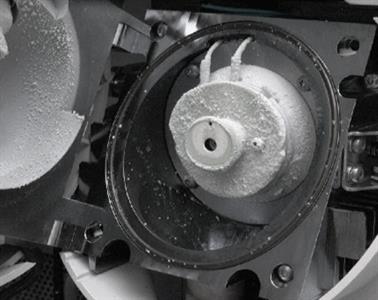
When chromatographic background remains low and system performance is otherwise stable, the white deposits are typically associated with the accumulation of mobile phase additives, salts, or non-volatile sample components on heated LC-MS surfaces.
Understanding the source of these deposits can help determine appropriate maintenance procedures and prevent unnecessary column replacement.
Are TYPE-C™ Columns Bleeding?
Cogent™ TYPE-C™ columns, including Diamond Hydride™, are manufactured using stable silicon-carbon (Si-C) bonded chemistry designed for use in demanding HPLC and LC-MS applications.
As a result:
- Stationary phase bleed is typically very low.
- Background chromatographic noise generally remains low.
- LC-MS compatibility is excellent when appropriate mobile phases are used.
When white deposits are observed in combination with low chromatographic background, column bleed is generally not the most likely explanation.
What Causes the White Residue?
The most common cause is gradual accumulation of materials introduced through the mobile phase or sample matrix.
Potential contributors include:
- Ammonium acetate
- Ammonium formate
- Non-volatile buffers
- Sample matrix residues
- Biological contaminants
- Inorganic salts
- Mobile phase additives
As mobile phase droplets are desolvated within the ion source, residual non-volatile materials can remain behind and accumulate over time.
This process occurs even when chromatographic background remains extremely clean.
Typical Salt and Additive Buildup on an LC-MS Inlet
Why Source Deposits Can Occur Without High Background Noise
Chromatographic background and physical residue formation do not always correlate.
It is possible to have:
- Low baseline noise
- Stable chromatography
- Good sensitivity
while still accumulating deposits within the ion source. This occurs because the residue is often localized on hot source components rather than appearing directly as chromatographic background. Consequently, source contamination may gradually develop long before significant chromatographic symptoms are observed.
Mobile Phase Additives and Residue Formation
Ammonium Acetate and Ammonium Formate
These additives are widely used because of their LC-MS compatibility and ability to support ionization. However, increasing concentration also increases the amount of material entering the source.
Potential effects include:
- Source deposits
- Ion optics contamination
- Increased maintenance frequency
- Reduced long-term sensitivity
For this reason, the lowest concentration that provides acceptable chromatographic performance is generally preferred.
Formic Acid and Acetic Acid
Where chromatographically appropriate, volatile acids may provide several advantages:
- Reduced residue formation
- Improved source cleanliness
- Simplified maintenance
- Excellent LC-MS compatibility
Many methods can be developed using:
- 0.1% Formic Acid
- 0.2% Acetic Acid
without requiring higher concentrations of salts or buffers.
Mobile Phase Optimization Strategies
One advantage of methods developed on TYPE-C™ columns is that effective retention is often achieved using relatively low additive concentrations.
This can help reduce:
- Source contamination
- Ion suppression
- LC-MS maintenance
- System downtime
When possible, method developers should evaluate lower ionic-strength conditions before increasing buffer concentrations.
Sample Matrix Contributions
The residue may also originate from the sample rather than the mobile phase.
Common sources include:
- Serum samples
- Plasma samples
- Biological extracts
- Food extracts
- Environmental matrices
- Pharmaceutical formulations
Even after sample preparation, trace residues can accumulate with repeated injections.
Periodic cleaning and maintenance remain important regardless of mobile phase composition.
Routine LC-MS Maintenance Recommendations
Regular source maintenance is the most effective way to manage additive-related deposits.
Inspect the Source Regularly
Monitor:
- Sampling cone surfaces
- Inlet assemblies
- Ion optics
- Spray shields
Look for:
- White deposits
- Crystalline films
- Salt accumulation
Clean According to Manufacturer Procedures
Follow instrument-specific maintenance procedures and approved cleaning solvents.
Do not use abrasive cleaning methods.
Re-Evaluate Additive Concentration
If deposits appear rapidly:
- Reduce buffer concentration if possible.
- Reassess method requirements.
- Use the lowest validated concentration.
Quick Diagnostic Test for White Residue
When white deposits are observed, a simple test can help identify whether the material is likely a salt residue.
Procedure
- Wipe the residue using a laboratory wipe wetted with water.
- Rinse the wipe into a small amount of clean water.
- Observe whether the material dissolves.
Interpretation
If the residue dissolves readily in water, it is likely:
- Salt residue
- Buffer residue
- Mobile phase additive buildup
- Matrix contamination
Silica particles do not readily dissolve under these conditions.
This simple observation can help rule out stationary phase shedding as the source of the deposits.
When Column-Related Issues Should Be Considered
The white residue alone is generally not sufficient evidence of a column problem.
Further investigation may be warranted if the following occur simultaneously:
- Significant pressure increases
- Baseline instability
- Loss of efficiency
- Major retention changes
- Persistent chromatographic deterioration
If these symptoms remain after source cleaning and mobile phase evaluation, additional column troubleshooting may be appropriate.
Key Takeaways
- A white film on an LC-MS source is usually caused by mobile phase additives or sample matrix residues rather than column bleed.
- Diamond Hydride™ and other TYPE-C™ columns exhibit very low stationary-phase bleed in LC-MS applications.
- Ammonium acetate and ammonium formate are common contributors to source deposits.
- Lower additive concentrations often reduce contamination while maintaining chromatographic performance.
- Residue formation can occur even when chromatographic background remains very low.
- Routine source inspection and cleaning are essential for maintaining sensitivity.
- Dissolution of the residue in water strongly suggests salt or additive accumulation rather than silica shedding.
Related Resources
- Care & Maintenance - TYPE-C Columns - Information
- LC-MS Optimization Support with TYPE-C Columns - Information
- Mobile Phase Preparation, Buffers & Solvent Handling
- Troubleshooting & Performance Support - Diamond Hydrid e
References
- Chrom Resource Center Tip: Choose a Suitable Mobile Phase Additive for Negative Ionization Mode in LC-MS.
- Chrom Resource Center Tip: The Effect of Ionic Strength of the Mobile Phase Additive in HILIC Methods.
- Instrument manufacturer LC-MS maintenance and source-cleaning procedures.
- Internal observations from TYPE-C™ column LC-MS applications.
